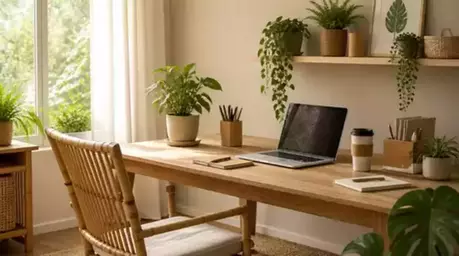
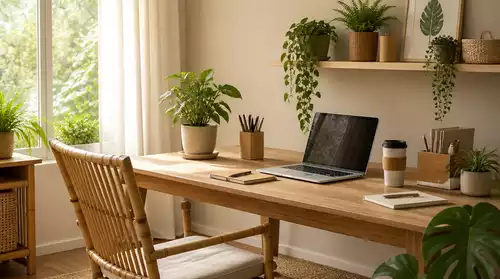
As remote work continues to grow, the importance of creating an eco-friendly workspace becomes crucial. What if your home office could reflect your commitment to sustainability while enhancing your productivity? Here, we explore practical ways to turn your workspace into an environmentally friendly haven.
What You Will Learn
- Understanding sustainability in workspace design and its benefits for health, productivity, and the environment.
- Choosing eco-friendly furniture options, such as pieces made from recycled materials or locally sourced wood.
- Incorporating sustainable materials like bamboo and cork, which are both renewable and stylish.
- Utilizing low-VOC paints to maintain better indoor air quality in your home office.
- Implementing energy-efficient lighting solutions to enhance natural light and reduce electricity consumption.
- Opting for digital solutions to minimize paper waste and adopting reusable supplies for a greener office setup.
Key Benefits of a Green Home Office
Adopting sustainable practices in your home office can lead to significant advantages, which are summarized below:
Improved Health
Using sustainable materials reduces indoor air pollution and creates a healthier workspace.
Increased Productivity
A well-designed, eco-friendly workspace boosts creativity and focus.
Cost Savings
Sustainable practices often lead to lower energy bills and reduced waste.
Environmental Impact
Making eco-conscious choices helps reduce your carbon footprint.
Creating an Eco-Friendly Workspace: Sustainable Home Office Ideas
As more of us embrace remote work, creating an eco-friendly workspace has never been more important. Our home offices can reflect our commitment to sustainability while boosting productivity and comfort. At Eco Habits Daily, I believe small changes can make a big difference in reducing our ecological footprints, even in the spaces where we work every day. For additional tips on managing waste efficiently, check out our guide on eco-friendly junk removal.
Understanding Sustainable Home Office Design
When we talk about sustainable home office design, it’s all about making choices that are good for both the planet and our well-being. Sustainability in the workspace means using materials and practices that minimize environmental harm while supporting our health and productivity. This might include everything from the furniture we choose to the energy we consume.
Defining Sustainability in Your Workspace
Sustainability can be defined as meeting our present needs without compromising the ability of future generations to meet theirs. In an office context, this looks like using resources wisely, selecting eco-friendly materials, and fostering a workplace environment that promotes a healthy work-life balance. It’s not just about the physical space—it’s also about how we engage with it!
Benefits of a Green Home Office
Adopting a green approach in your home office can lead to numerous benefits. Here are some key advantages:
- Improved Health: Using sustainable materials can reduce indoor air pollution and create a healthier workspace.
- Increased Productivity: A well-designed, eco-friendly workspace boosts creativity and focus.
- Cost Savings: Sustainable practices often lead to lower energy bills and reduced waste.
- Environmental Impact: Making eco-conscious choices helps reduce your carbon footprint.
Furniture and Materials: Choosing Responsibly
Choosing the right furniture and materials is crucial in creating an eco-friendly home office. Opting for pieces made from sustainable sources not only supports the environment but also adds character and warmth to your workspace. For more ideas on how to live sustainably, explore these easy eco-friendly habits to start.
Eco-Friendly Furniture Options for Your Home Office
When selecting furniture, look for pieces that are made from renewable resources or recycled materials. Here are some options to consider:
- Furniture from Recycled Materials: Many brands now offer desks and chairs made from recycled plastic and metal.
- Locally Sourced Wood: Furniture made from responsibly sourced wood minimizes transportation emissions.
- Second-Hand Options: Consider buying pre-loved furniture to reduce waste while saving money!
Reclaimed Wood and Recycled Materials for Desks
Desks made from reclaimed wood or recycled materials not only look unique but also contribute to sustainability. Reclaimed wood gives a rustic charm, making your workspace feel inviting. Plus, it keeps unwanted wood out of landfills!
Low-VOC Paint Options for a Healthier Space
Painting your office walls? Look for low-VOC (volatile organic compounds) paints. These paints are less harmful and help maintain a better indoor air quality. Your workspace will not only look fresh, but it will also support your health!
Bamboo and Cork: Sustainable Materials for Furniture
Bamboo and cork are excellent choices for sustainable furniture. Both materials are renewable resources that grow quickly and can be harvested without destroying the plant. Here’s why you might consider them:
- Bamboo: Strong and lightweight, it’s perfect for desks and shelves.
- Cork: Perfect for flooring and bulletin boards, it's also a natural insulator!
Best Options for Eco-Friendly Seating
Comfort is key in a home office, and choosing the right seating is essential. Look for chairs made from sustainably sourced materials or those that are certified by organizations like Forest Stewardship Council (FSC). Ergonomic designs will also help maintain your posture and comfort during long workdays. Consider adopting mindful shopping habits to find the best sustainable options.
Sustainable Textiles and Biodegradable Materials
Don’t overlook textiles in your office! Opt for curtains, cushions, and rugs made from organic cotton or other sustainable fabrics. These materials are often better for the planet and can add a touch of style to your workspace.
Incorporating sustainability in your home office doesn’t have to be overwhelming. By making thoughtful choices about furniture and materials, you create a workspace that’s not just functional but also reflective of your commitment to a greener future. Let's dive deeper into lighting solutions next!
Pro Tip
Did you know? Incorporating plants into your home office can significantly improve air quality and boost your mood! Consider adding low-maintenance options like snake plants or pothos, which are not only aesthetically pleasing but also help purify the air, creating a healthier workspace.
Frequently Asked Questions About Creating an Eco-Friendly Workspace
Conclusion: Building a Sustainable Future in Your Home Office
As we wrap up our exploration of creating an eco-friendly workspace, it's essential to reflect on the key sustainable home office ideas we've discussed. From choosing eco-friendly furniture to optimizing lighting and adopting paperless practices, each step contributes to a healthier planet. The choices you make in your workspace can significantly impact your well-being and the environment, proving that green living is not only feasible but also enjoyable!
Recap of Key Sustainable Home Office Ideas
Let’s quickly summarize some important aspects to keep in mind when designing your sustainable home office:
- Furniture: Opt for sustainable materials like reclaimed wood or bamboo.
- Lighting: Embrace natural light and use energy-efficient LED options.
- Technology: Invest in energy-efficient devices and smart solutions.
- Paper Use: Go digital to minimize paper waste and use reusable supplies.
These choices not only enhance your work environment but also contribute to a more sustainable future, aligning perfectly with our mission at Eco Habits Daily. Every small change you make adds up to a significant impact! For more practical actions, consider exploring simple low-waste lifestyle tips.
Encouragement to Adopt Sustainable Practices
It’s important to recognize the long-term benefits of a green workspace. By implementing sustainable practices, you're not just making a trendy choice; you're investing in your health and the planet's future. A green workspace can lead to improved air quality, which enhances focus and productivity, making remote work more enjoyable!
Additionally, embracing sustainability can inspire those around you. Share your journey with friends and family, and you may find that your efforts spark a ripple effect of eco-friendly habits within your community. Remember, living sustainably is a shared responsibility, and together we can contribute to a brighter future!
Call to Action: Start Transforming Your Home Office Today
Now that we've covered the essentials, it’s time to put your knowledge into action! Here are a few steps to help you implement your sustainable home office plan:
- Assess Your Space: Take a look at your current setup and identify areas for improvement.
- Prioritize Changes: Focus on one or two items to change this week, such as switching to LED lighting or adding a plant!
- Research Products: Explore sustainable furniture and office supplies that fit your budget.
- Share Your Progress: Engage with the Eco Habits Daily community by sharing your sustainable changes on social media!
Every step you take is a step towards a more sustainable lifestyle. Let’s work together to create an inspiring home office that reflects our values and makes a positive impact on the environment. Start today—your green workspace awaits! For additional inspiration on decluttering sustainably, read about responsible decluttering best practices.
Recap of Key Points
Here is a quick recap of the important points discussed in the article:
- Sustainable Materials: Choose eco-friendly furniture made from reclaimed wood, bamboo, or recycled materials to support a healthier planet.
- Lighting Solutions: Maximize natural light and opt for energy-efficient LED lighting to reduce energy consumption.
- Health Benefits: Incorporate low-VOC paints and sustainable textiles to improve indoor air quality and comfort in your workspace.
- Digital Practices: Go paperless and utilize reusable supplies to minimize waste and promote eco-friendly habits.
- Community Inspiration: Share your sustainable journey to inspire others and create a ripple effect of eco-friendly practices.